Khalili, Laleh
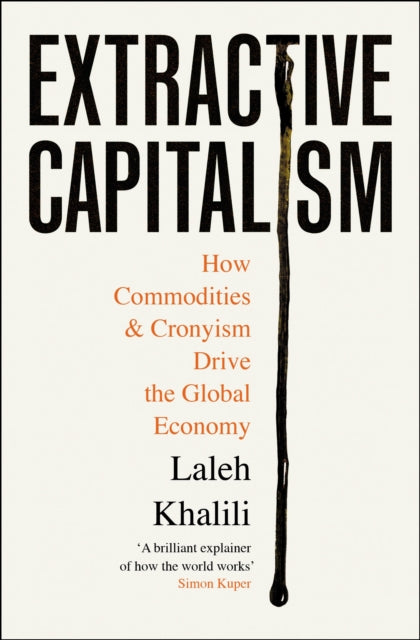
Extractive Capitalism : How Commodities and Cronyism Drive the Global Economy
Extractive Capitalism : How Commodities and Cronyism Drive the Global Economy
Couldn't load pickup availability
Author: Khalili, Laleh
Arabian peninsula
Published on 1 May 2025 by Profile Books Ltd in the United Kingdom.
Paperback / softback | 208 pages
129 x 198 x 17 | 186g
A Financial Times 'What to read in 2025' Book'Essential reading' Françoise Vergès, author of A Decolonial Feminism'Profound and compelling ... A book that I couldn't put down' Adam Hanieh, author of Crude CapitalismWhether it's pumping oil, mining resources or shipping commodities across oceans, the global economy runs on extraction. Promises of frictionless trade and lucrative speculation are the hallmarks of our era, but the backbone of globalisation is still low-cost labour and rapacious corporate control. Extractive capitalism is what made - and is still making - our unequal world.
Professor Laleh Khalili reflects on the hidden stories behind late capitalism, from seafarers abandoned on debt-ridden container ships to the nefarious reach of consultancy firms and the cronyism that drives record-breaking profits. Piercing, wry and constantly revealing, Extractive Capitalism brings vividly to light the dark truths behind the world's most voracious industries.
Review by a member of our Book Buying team:
Combining journalistic sharpness with academic authority, Laleh Khalili shows how a tiny few – very rich people and huge corporations – control the world with colossal wealth and profit-driven plunder.
Every year, the world consumes 4 billion tonnes of oil - and 50 billion tonnes of sand for construction and reclamation. The corporates tell major groupings of the world’s richest states what to do, and futures traders now wield enormous power from their keyboards. Indigenous peoples in resource-rich areas face extinction for being in the way of profits; even if those threatened sometimes win, governments under corporate pressure often repeal legal protections.
Oil and sand are transported mainly by sea. As there are 42 flags of convenience, it is difficult to identify owners, let alone insurers; ships are covered by different firms over hull and cargoes, accidents to crew, war risks, and much else. From 1686 to 1807, Lloyd’s had a monopoly on insuring human cargoes – enslaved Africans. As for crews’ terms and conditions, are the wretched of the earth also the wretched of the sea?
The author, a qualified engineer, details her own experience of working for global management consultancies. The major western states considered post-war decolonisation a serious threat, and often organised the violent overthrow of elected governments. Today’s corporates like having ex-generals on their boards, and China’s Belt and Road Initiative is ‘capitalism “with Chinese characteristics”’. Our world is the one Thomas Hobbes feared above all.
If you cannot find the book you're after, please click here.
View full details